



The next fertilizer crisis is inevitable. Whether it becomes a food crisis depends on what we invest in now. Join Us Today Africa’s Fertilizer Crisis: Why Short-Term Fixes Are No Longer Enough Africa’s fertilizer supply challenge has long been understood as a development issue. But today, it is known to be something far more urgent: a systemic vulnerability exposed by global […]

Africa’s fertilizer supply challenge has long been understood as a development issue. But today, it is known to be something far more urgent: a systemic vulnerability exposed by global shocks.
A 2026 study by the African Plant Nutrition Institute (APNI)1 suggests that the real problem lies in how fertilizer systems are governed, not only how the inputs are supplied.
The study highlights how institutional design, policy consistency, and market coordination shape outcomes.
A few critical insights on fertilizer have emerged:
The discussion reinforces the notion that fertilizer use in Africa is more than just an issue with access to inputs; it is a systemic problem. This distinction matters, because it explains why many past interventions have delivered mixed or temporary results.
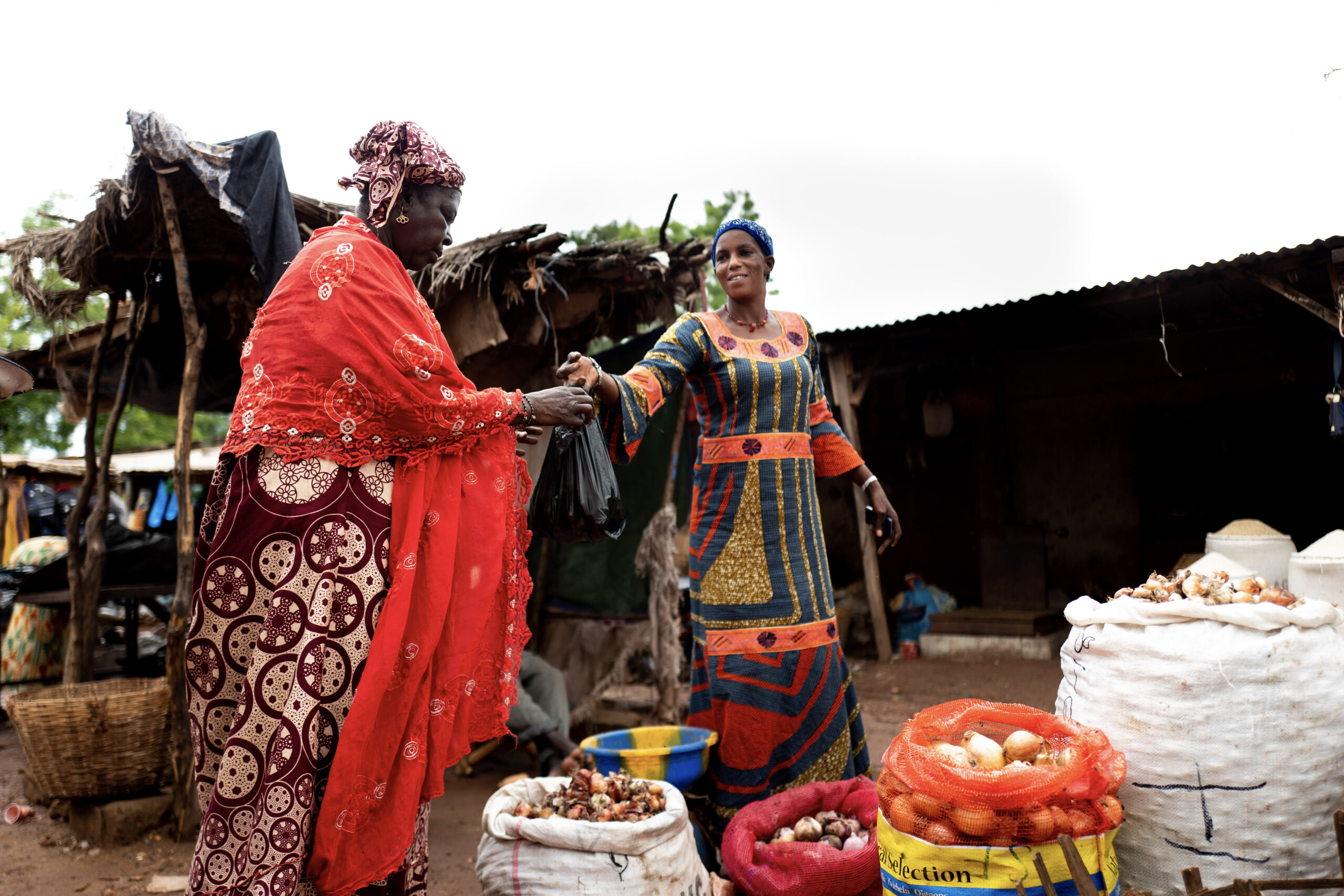
Two women make an exchange at a market in Mali.
Building on this context, Martin Fregene of the African Development Bank Group and Chakib Jenane of the World Bank, in an article published by Al Jazeera,2 argue that Africa is now facing a fertilizer emergency that demands immediate action. Supply disruptions linked to geopolitical tensions have tightened global markets, pushing prices up and limiting availability.
For a region already operating within fragile systems, the consequences are amplified:
Fregene and Jenane’s analysis builds on lessons observed during the Russia-Ukraine conflict, when fertilizer prices surged globally and exposed Africa’s dependence on imports and external supply chains.
The African Development Bank Group responded through its $1.5 billion African Emergency Food Production Facility, launched in 2022 to help African countries rapidly scale up food production by improving farmers’ access to certified seeds and fertilizers. The initiative supported millions of farmers across the continent during one of the most severe agricultural input crises in recent history.
With 3.5 million metric tons of fertilizer delivered to date through the facility, a second phase is now being rolled out, focused on moving beyond immediate emergency response toward strengthening long-term national food sovereignty and resilience. This shift reflects growing recognition of the need for African-led solutions to mitigate continued global supply disruptions and fertilizer trade uncertainty.
Fregene and Jenane note that without rapid government intervention, the current shortage could cascade into a full-scale food crisis. Fertilizer systems fail when policies are inconsistent, markets are distorted, and institutions are weak.

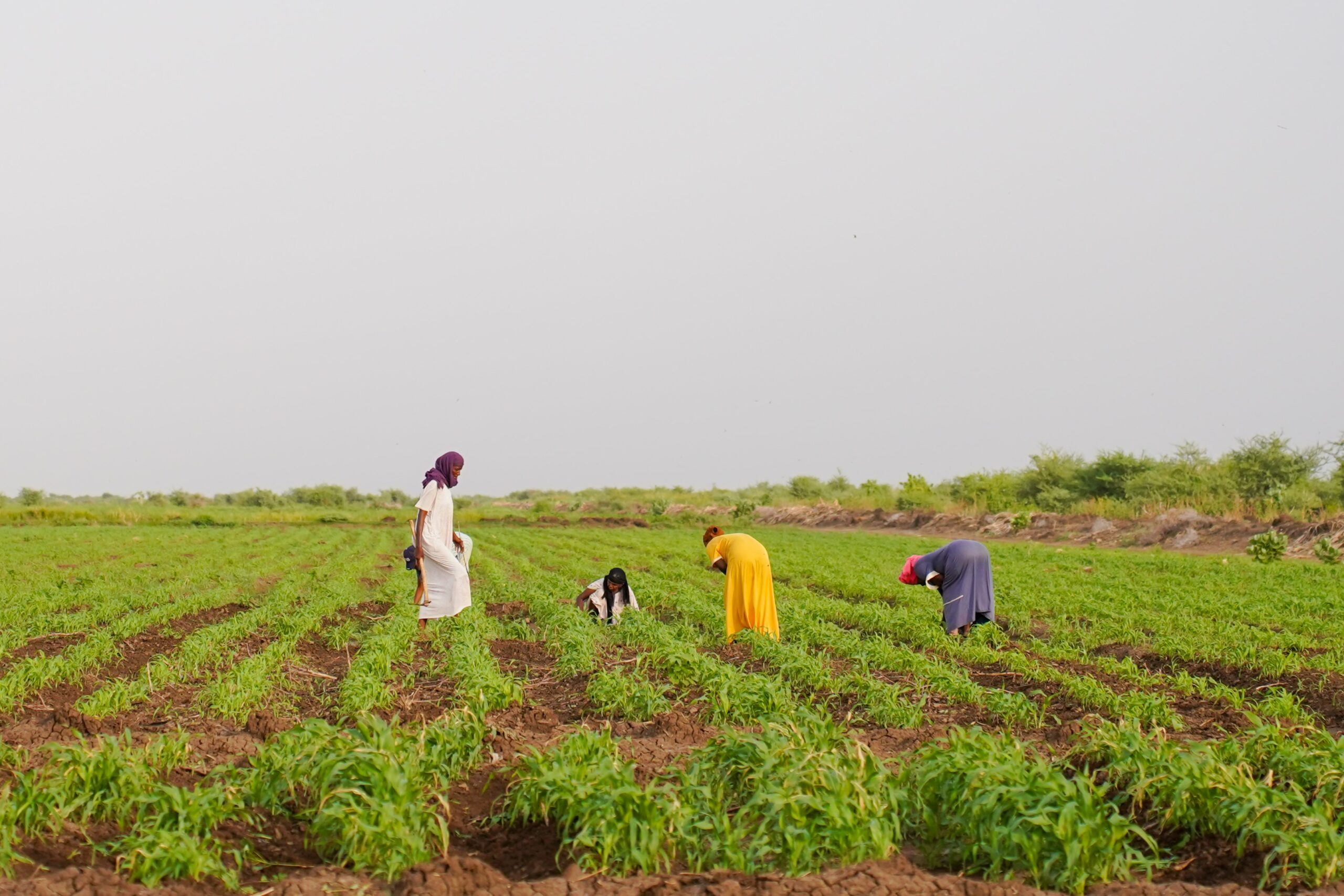
Farmers in the Halfa Agricultural Scheme proudly work in their fields after they received fertilizers from Al Abdah Bank (a microfinance institution). Photo credit:CIMMYT/Sustain Sudan
The urgency of the current situation could entice governments to fall back on familiar tools, especially broad fertilizer subsidies or emergency imports.
While such measures may provide short-term relief, reactive policymaking that is rushed or poorly targeted can:
In other words, short-term fixes can lead to long-term problems.
While immediate intervention is critical, it is important to define what a “good” intervention would look like.
Emergency responses are necessary, but they must avoid distorting markets. Smart targeting, such as digital voucher systems, can balance speed with efficiency.
Farmers and distributors need predictability. Sudden policy shifts are as damaging as supply shocks.
Rather than crowding out private suppliers, governments should strengthen distribution networks, improve transparency, and reduce logistical bottlenecks.
Domestic fertilizer production, regional trade integration, and improved infrastructure are essential to reducing Africa’s exposure to external shocks.
Policies must account for risk aversion, climate uncertainty, and access to finance. Lower prices alone do not guarantee adoption.
Timely and transparent fertilizer market data is critical during periods of volatility. Governments and regional institutions need reliable information on prices, trade flows, availability, and consumption trends to respond effectively and avoid making policy decisions based on incomplete signals.
Governments must move decisively to prevent immediate harm. But how they act matters just as much as whether they act. Africa has faced fertilizer challenges before. What is different now is both the scale of the shock and the clarity of the lessons already available.
Therefore, the current crisis should be treated not only as an emergency to manage, but as an opportunity to build more resilient, predictable, and self-sustaining fertilizer systems across Africa.
While targeted short-term measures may provide temporary relief, they risk perpetuating structural weaknesses rather than resolving them. Only coordinated evidence-based reforms can strengthen long-term food security, stabilize markets, and reduce Africa’s vulnerability to recurring global shocks.
This analysis is based on information compiled from multiple publicly available sources and market intelligence. While every effort has been made to verify the accuracy of the information, the authors and publishers accept no liability for any loss, damage, or disruption caused by errors, omissions, or the use of this information.