



The next fertilizer crisis is inevitable. Whether it becomes a food crisis depends on what we invest in now. Join Us Today The global fertilizer disruption triggered by the escalating U.S.-Israel-Iran conflict is not just an ordinary supply chain issue; it is a timing emergency. With roughly one-third of global fertilizer trade moving through the Strait of Hormuz and nearly half of the traded supply originating from the Persian Gulf, ongoing […]
Cargo ship docked beside an industrial port. Source: Yara International

The global fertilizer disruption triggered by the escalating U.S.-Israel-Iran conflict is not just an ordinary supply chain issue; it is a timing emergency.
With roughly one-third of global fertilizer trade moving through the Strait of Hormuz and nearly half of the traded supply originating from the Persian Gulf, ongoing disruptions are constraining flows at a critical moment in the agricultural calendar. Prices have already surged, logistics are tightening, and production cuts across key regions are compounding the shock.
But for Africa, the most significant problem lies in its structural exposure to these shocks and others, as described below.
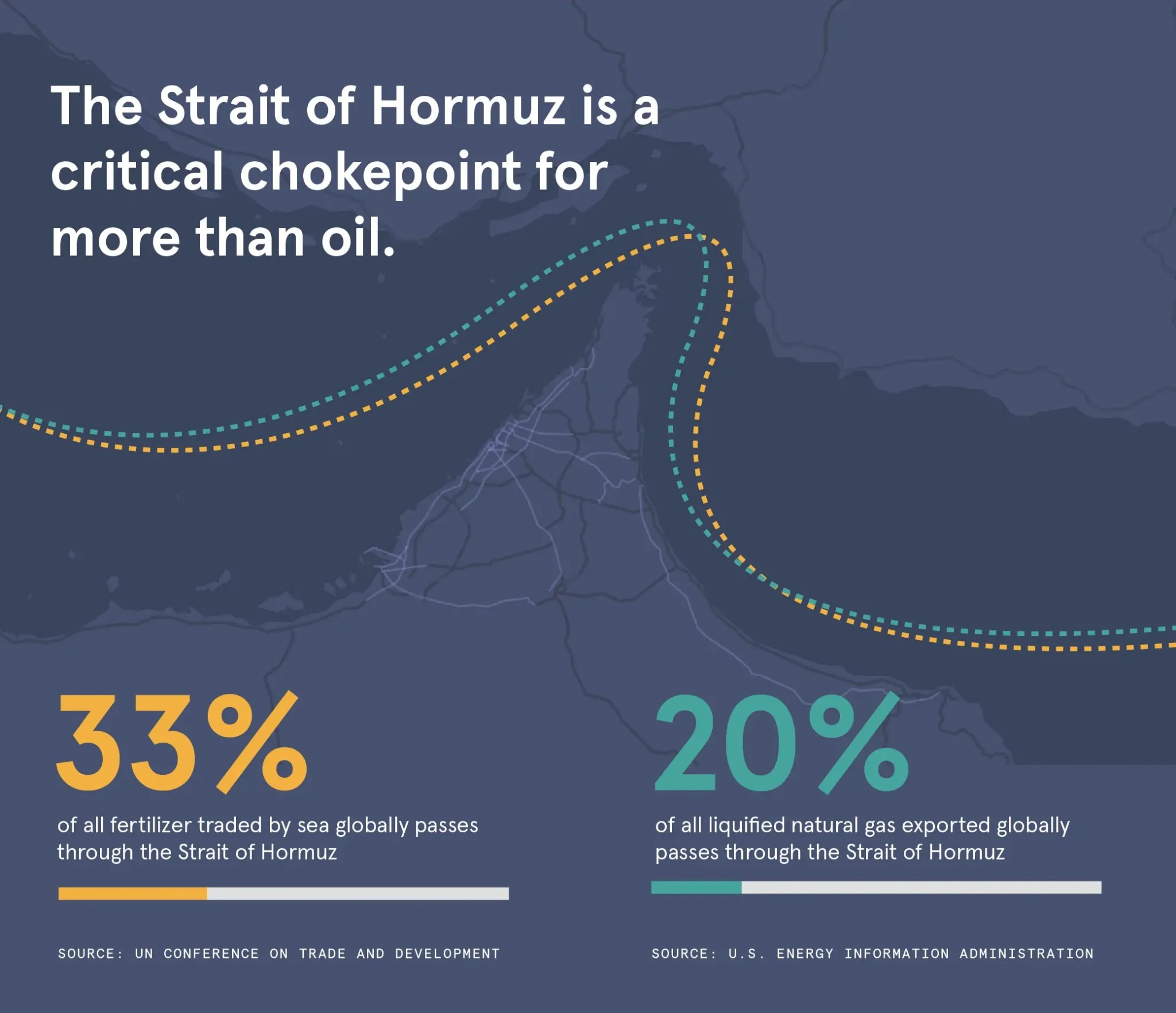
Caption: Closure of the Strait of Hormuz and its effect on energy and fertilizer logistics. Source: Wright Research
Global fertilizer markets are under intense simultaneous strain, with production being reduced, restricted, or halted across several key regions.
These combined shocks are significantly tightening global fertilizer supply.
Markets are responding sharply to these pressures. Urea prices have surged from an average of $490 to $780 per metric ton within a month, a 59% increase, signalling rapidly dwindling availability.
With nearly half of global urea exports concentrated in the Gulf, and about one-third of global fertilizer trade passing through the Strait of Hormuz, the system is highly exposed to regional instability and logistical bottlenecks. These price increases are not just common market fluctuations; they reflect a market system under significant stress, where supply constraints are outpacing the ability to adjust.

While mineral fertilizer markets are under pressure, most African countries maintain uninterrupted in‑country production of organic fertilizers (composts and liquid), which contribute to sustaining soil health when used alongside mineral fertilizers.
Much of the continent relies on imported mineral fertilizers. This reliance leaves countries highly vulnerable not only to price increases, but also to delays and disruptions in global logistics. What makes this moment critical is its alignment with the planting season. Fertilizer delayed now cannot be fully compensated for later. Reduced access and application will translate directly into lower yields.
A familiar but dangerous cycle is emerging: constrained supply, rising prices, reduced farmer access, and ultimately, declining productivity. This is how a fertilizer shock evolves into a food security crisis.
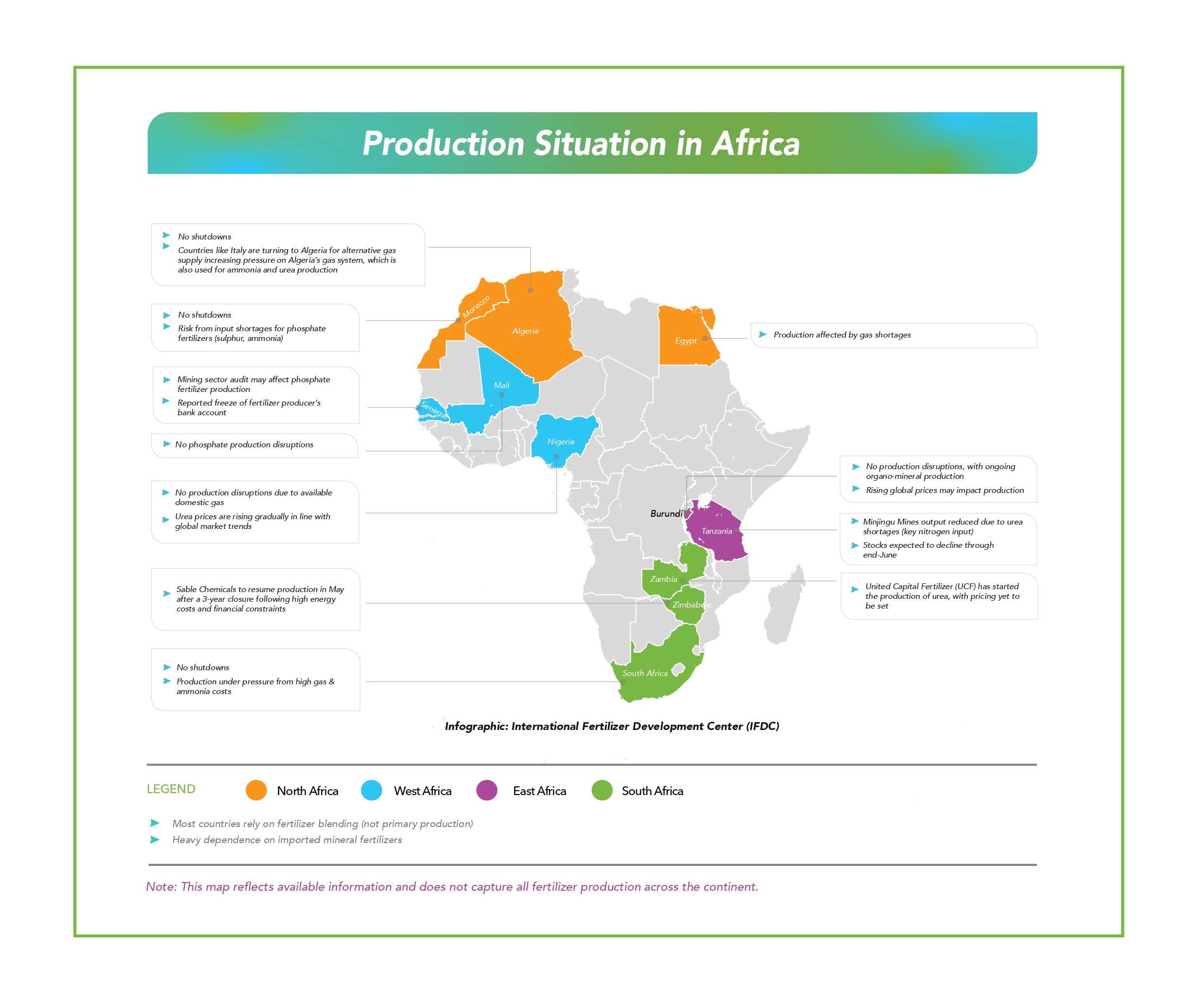
This global crisis is reverberating through the fertilizer market systems of Africa, necessitating a timely, integrated response.
The International Fertilizer Development Center (IFDC), Sustain Africa, and AfricaFertilizer call for the following priority actions:
This analysis is based on information compiled from multiple publicly available sources and market intelligence. While every effort has been made to verify the accuracy of the information, the authors and publishers accept no liability for any loss, damage, or disruption caused by errors, omissions, or the use of this information.